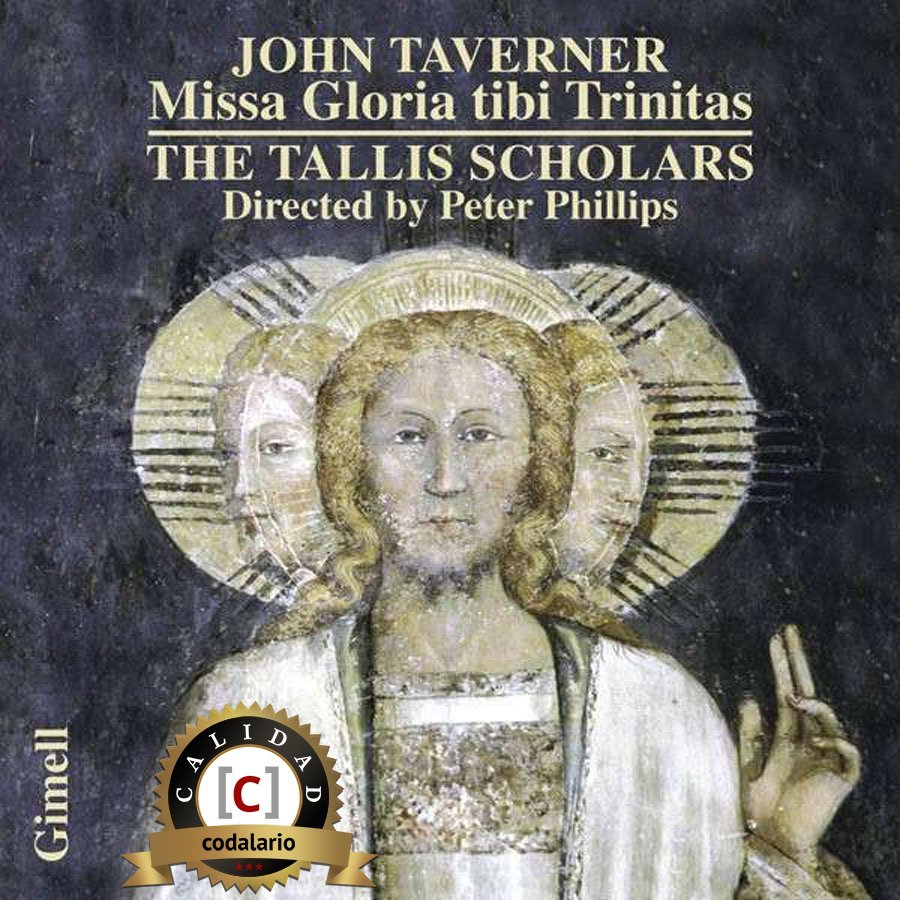
John Browne [fl. 1480-1505]: Stabat mater á 6.
The Tallis Scholars | Peter Phillips.
Glorious Eton Choirbook.
Roger Bowers worte about Browne:
«English composer and musician. In a contemporary musical source his Stabat mater is ascribed to ‘Johannes Browne Oxoniensis’. No-one of this name appears as a member of the choir of any of the major Oxford colleges at this time; however, during 1490 a John Browne was one of the chaplains of the household of John de Vere, Earl of Oxford. This was the grandest of the aristocratic household chapels of its day, and there need be little doubt that this was the composer. His musical prowess was also known to royalty. His setting of «Stabat iuxta Christi crucem» employs as its cantus firmus the tenor of the song From stormy windes, composed by Edmund Turges in 1501 to commemorate the departure of Prince Arthur from court to begin his public life as Prince of Wales. The engagement of this musical quotation simultaneously with a text of maternal mourning suggests that Browne composed the piece for Arthur's mother, Queen Elizabeth, following the prince's untimely death in 1502. No more is known about Browne; there are no grounds for identifying him with the John Browne who, aged 14, applied for election as a scholar of Eton College in 1467.
In the quality of his accomplishment he may be considered the greatest English composer of the period between Dunstaple and Taverner. Among the contents of the Eton Choirbook (GB-WRec 178, compiled c1502–5) his work was accorded pride of place. Its index reveals that it originally included 15 of his compositions; of the 11 Marian antiphons nine remain complete (or it is possible to complete them), but the sole survivor of the four Magnificat settings is only fragmentary. Of the ten pieces written for full choir only four have survived, throwing into especial relief Browne's facility for composing for the restricted compass of men's voices alone. His polyphony is dense and endlessly resourceful. He was a master of cogency of overall planning, deploying cantus-firmus technique and the alternation of reduced-voice and full scoring with a seemingly effortless artistry that wholly conceals the fact that certain compositions (for example the first of the Salve regina settings) stand upon an elaborately mathematical disposition of their successive and component proportions.
The Eton Choirbook opens with his O Maria salvatoris mater, whose eight voices exhibit a remarkable assurance in contrapuntal finesse. Equally imposing are the three six-voice Marian antiphons on the Stabat mater and texts cognate with it. Browne is representative of the English florid style of composition not only at its most assured but also at its most imaginative. Few closing periods approach in breadth and sweep the ‘Salve’ concluding his first Salve regina, or in poignancy the setting of ‘gaudia’ ending Stabat iuxta Christi crucem, which (if Harrison's edition represents correctly contemporary practices in the realization of musica recta and musica ficta) engages a quite remarkable deployment of the technique of false relations. Moreover, long before the contrivances of the madrigalists, Browne created in his masterpiece, the six-part Stabat mater, a mood of brooding and despairing melancholy and introspection that gathers an inexorable momentum and energy until its eruption into a startling and percussive outburst at ‘Crucifige’ (‘Crucify!), articulated at the very top of the treble register, that represents the work's greatest climax – an unforgettable piece of composition unequalled anywhere in the European music of his time.
It was common for musicians of this period in aristocratic employment to compose songs and devotional pieces to vernacular texts as well as church music. Three compositions surviving in a songbook of 1501 (the Fayrfax Book, GB-Lbl Add.5465) that are attributed just to ‘Browne’ may well be the work of this composer. Two are to devotional texts and one to secular, two in three parts, one in four; however, in response to the difference in the destined ambience of performance they are considerably different in style from the sacred compositions. The counterpoint of Margaret meke is deft, though lightweight in comparison with that of the church music; the two devotional pieces are more reflective, especially in the occasional held chords and relatively flexible imitation of Woffully araid.»
Peter Phillips said about the composer and this piece:
« If so much of the music which originally surrounded John Browne had not been lost over the course of time, his style might seem less extraordinary today. As it is his writing is extreme in ways which apparently have no parallel, either in England or abroad. Compared with the ebullient William Cornysh, Browne is subtle, almost mystical, despite his colossal textures; compared with him Robert Fayrfax and Nicholas Ludford seem pedestrian. Where Jacob Obrecht made compositional history by writing in six parts in his glorious Salve regina, Browne wrote in eight in O Maria salvatoris. And although this piece would soon be rivalled by Robert Wylkynson in his nine-voice Salve, it is known that Wylkynson only tried this because the Browne was there to beat.
All the evidence suggests that Browne simply set out to make more expressive than before all the elements of composition which he had inherited: harmony, melody and sonority. Sonority is the one which will strike the modern listener most forcefully, not only in the eight-voice textures of O Maria salvatoris, but in the way every piece on this disc is scored for a different grouping. O Maria salvatoris (TrMAATTBB) may seem remarkable, but so in a different way are Stabat iuxta (TTTTBB), O regina mundi clara (ATTTBarB), not to mention the more ‘normal' Stabat mater (TrMAATB) and Salve regina I (TrMATB). Every piece represents a new sound-world within which Browne was able to deploy his incomparable grasp of sustained melody. This is another extreme: the sheer length of Browne's lines gave him rare opportunities for graceful contours, arabesques and embellishments - never have vocal lines been so seductive. And underneath, as with any composer of sustained melody, there is a completely reliable use of harmony, relatively simple compared with later composers with this talent, but always fitting the melodies like a glove, whether shaping cadences or adding a chromatic inflection to heighten the mood. It is those chromaticisms which represent the third extreme.
All the music on this disc is to be found uniquely in the earlier folios of the Eton Choirbook, dating from about 1490 to 1500, whose index tells us that originally there were ten more pieces by Browne in the collection. Of these five are completely lost, two more are incomplete, and the remaining three were too substantial to include on this disc. The five which we have recorded are all quite similar in one respect: their overall length and division into two clearly delineated parts, the first in triple time, the second in duple. The architecture of these halves is also similar: each building slowly to its final cadence through reduced voice sections, leading to the full choir at full throttle - this is even true in the gentle Stabat mater. With the Salve regina, for example, Browne was careful to convey the reflective nature of the text for most of its length, but eventually allowed the final ‘Salve' full reign, building through thirty-five bars of melisma to a trumpet-like open fifth on the last chord.
The Salve regina and the Stabat mater are the pieces which for years have maintained Browne's reputation as a composer. They are both highly expressive, though for many commentators the Stabat mater is the supreme masterpiece of the period, contrasting dramatic writing with contemplative passages in an emotional world of contrasts thought to have surfaced first with Monteverdi. Certainly there is nothing so wide-ranging in a single work by Palestrina. The drama breaks through the surface at the word ‘Crucifige', which Browne hammers into place before turning inwards again with the phrases which follow: ‘O quam gravis' (‘O how bitter was your anguish'). This quartet, at such a sensitive moment in the text, is one of the most perfect examples of Browne's art: at fifty bars in length its melodies are able to unwind as if time has stopped, an effect heightened by the use of slow triplets.»
This wonderful performance is quasi perfect. No one like the sopranos of The Tallis Scholars for this music.
The sonority, pitch, technique and expression are really amazing.
Salve Browne, TTS and Peter Phillips.
The Tallis Scholars | Peter Phillips.
Glorious Eton Choirbook.
Roger Bowers worte about Browne:
«English composer and musician. In a contemporary musical source his Stabat mater is ascribed to ‘Johannes Browne Oxoniensis’. No-one of this name appears as a member of the choir of any of the major Oxford colleges at this time; however, during 1490 a John Browne was one of the chaplains of the household of John de Vere, Earl of Oxford. This was the grandest of the aristocratic household chapels of its day, and there need be little doubt that this was the composer. His musical prowess was also known to royalty. His setting of «Stabat iuxta Christi crucem» employs as its cantus firmus the tenor of the song From stormy windes, composed by Edmund Turges in 1501 to commemorate the departure of Prince Arthur from court to begin his public life as Prince of Wales. The engagement of this musical quotation simultaneously with a text of maternal mourning suggests that Browne composed the piece for Arthur's mother, Queen Elizabeth, following the prince's untimely death in 1502. No more is known about Browne; there are no grounds for identifying him with the John Browne who, aged 14, applied for election as a scholar of Eton College in 1467.
In the quality of his accomplishment he may be considered the greatest English composer of the period between Dunstaple and Taverner. Among the contents of the Eton Choirbook (GB-WRec 178, compiled c1502–5) his work was accorded pride of place. Its index reveals that it originally included 15 of his compositions; of the 11 Marian antiphons nine remain complete (or it is possible to complete them), but the sole survivor of the four Magnificat settings is only fragmentary. Of the ten pieces written for full choir only four have survived, throwing into especial relief Browne's facility for composing for the restricted compass of men's voices alone. His polyphony is dense and endlessly resourceful. He was a master of cogency of overall planning, deploying cantus-firmus technique and the alternation of reduced-voice and full scoring with a seemingly effortless artistry that wholly conceals the fact that certain compositions (for example the first of the Salve regina settings) stand upon an elaborately mathematical disposition of their successive and component proportions.
The Eton Choirbook opens with his O Maria salvatoris mater, whose eight voices exhibit a remarkable assurance in contrapuntal finesse. Equally imposing are the three six-voice Marian antiphons on the Stabat mater and texts cognate with it. Browne is representative of the English florid style of composition not only at its most assured but also at its most imaginative. Few closing periods approach in breadth and sweep the ‘Salve’ concluding his first Salve regina, or in poignancy the setting of ‘gaudia’ ending Stabat iuxta Christi crucem, which (if Harrison's edition represents correctly contemporary practices in the realization of musica recta and musica ficta) engages a quite remarkable deployment of the technique of false relations. Moreover, long before the contrivances of the madrigalists, Browne created in his masterpiece, the six-part Stabat mater, a mood of brooding and despairing melancholy and introspection that gathers an inexorable momentum and energy until its eruption into a startling and percussive outburst at ‘Crucifige’ (‘Crucify!), articulated at the very top of the treble register, that represents the work's greatest climax – an unforgettable piece of composition unequalled anywhere in the European music of his time.
It was common for musicians of this period in aristocratic employment to compose songs and devotional pieces to vernacular texts as well as church music. Three compositions surviving in a songbook of 1501 (the Fayrfax Book, GB-Lbl Add.5465) that are attributed just to ‘Browne’ may well be the work of this composer. Two are to devotional texts and one to secular, two in three parts, one in four; however, in response to the difference in the destined ambience of performance they are considerably different in style from the sacred compositions. The counterpoint of Margaret meke is deft, though lightweight in comparison with that of the church music; the two devotional pieces are more reflective, especially in the occasional held chords and relatively flexible imitation of Woffully araid.»
Peter Phillips said about the composer and this piece:
« If so much of the music which originally surrounded John Browne had not been lost over the course of time, his style might seem less extraordinary today. As it is his writing is extreme in ways which apparently have no parallel, either in England or abroad. Compared with the ebullient William Cornysh, Browne is subtle, almost mystical, despite his colossal textures; compared with him Robert Fayrfax and Nicholas Ludford seem pedestrian. Where Jacob Obrecht made compositional history by writing in six parts in his glorious Salve regina, Browne wrote in eight in O Maria salvatoris. And although this piece would soon be rivalled by Robert Wylkynson in his nine-voice Salve, it is known that Wylkynson only tried this because the Browne was there to beat.
All the evidence suggests that Browne simply set out to make more expressive than before all the elements of composition which he had inherited: harmony, melody and sonority. Sonority is the one which will strike the modern listener most forcefully, not only in the eight-voice textures of O Maria salvatoris, but in the way every piece on this disc is scored for a different grouping. O Maria salvatoris (TrMAATTBB) may seem remarkable, but so in a different way are Stabat iuxta (TTTTBB), O regina mundi clara (ATTTBarB), not to mention the more ‘normal' Stabat mater (TrMAATB) and Salve regina I (TrMATB). Every piece represents a new sound-world within which Browne was able to deploy his incomparable grasp of sustained melody. This is another extreme: the sheer length of Browne's lines gave him rare opportunities for graceful contours, arabesques and embellishments - never have vocal lines been so seductive. And underneath, as with any composer of sustained melody, there is a completely reliable use of harmony, relatively simple compared with later composers with this talent, but always fitting the melodies like a glove, whether shaping cadences or adding a chromatic inflection to heighten the mood. It is those chromaticisms which represent the third extreme.
All the music on this disc is to be found uniquely in the earlier folios of the Eton Choirbook, dating from about 1490 to 1500, whose index tells us that originally there were ten more pieces by Browne in the collection. Of these five are completely lost, two more are incomplete, and the remaining three were too substantial to include on this disc. The five which we have recorded are all quite similar in one respect: their overall length and division into two clearly delineated parts, the first in triple time, the second in duple. The architecture of these halves is also similar: each building slowly to its final cadence through reduced voice sections, leading to the full choir at full throttle - this is even true in the gentle Stabat mater. With the Salve regina, for example, Browne was careful to convey the reflective nature of the text for most of its length, but eventually allowed the final ‘Salve' full reign, building through thirty-five bars of melisma to a trumpet-like open fifth on the last chord.
The Salve regina and the Stabat mater are the pieces which for years have maintained Browne's reputation as a composer. They are both highly expressive, though for many commentators the Stabat mater is the supreme masterpiece of the period, contrasting dramatic writing with contemplative passages in an emotional world of contrasts thought to have surfaced first with Monteverdi. Certainly there is nothing so wide-ranging in a single work by Palestrina. The drama breaks through the surface at the word ‘Crucifige', which Browne hammers into place before turning inwards again with the phrases which follow: ‘O quam gravis' (‘O how bitter was your anguish'). This quartet, at such a sensitive moment in the text, is one of the most perfect examples of Browne's art: at fifty bars in length its melodies are able to unwind as if time has stopped, an effect heightened by the use of slow triplets.»
This wonderful performance is quasi perfect. No one like the sopranos of The Tallis Scholars for this music.
The sonority, pitch, technique and expression are really amazing.
Salve Browne, TTS and Peter Phillips.